An Interview With The Civilian Oversight Board

I recently had the opportunity to talk about "Community Engagement" at a panel discussion hosted by the St. Louis Public Library. Afterward, a member of the recently-formed City of St. Louis Civilian Oversight Board introduced herself and asked if I'd like to meet the others on the team and learn more about the role of this newly-formed office within the Department of Public Safety.

I decided to take her up on the invitation with the intention of sharing some of the positive actions that are a result of the current events and scrutiny around policing in St. Louis and the region at large.

If you are like me, you watched the events play out after the death of Michael Brown in November, 2014 in Ferguson, Missouri and other small towns in the suburbs just north of St. Louis and came to the realization that things have to change. Conversations began on how to make improvements to the "taxation by citation" policing methods employed by many of these small towns in St. Louis County and the use of force in the line of duty to serve and protect across the many police departments in the region. 

One thing that seems obvious after the disputes, higher scrutiny and maybe most of all: cell phone footage of police interactions now available to nearly everyone via social media is that we need additional avenues to help bridge the efforts of the police force with the community. In order to ensure trust between law enforcement and the community, we need a process for citizens who feel they've been treated unjustly or unprofessionally by law enforcement officials to seek justice.  I think we can all agree that as citizens we want the best, most respectful, just and equitable relations with the police force that is possible. Respect is a two-way street.

Transparency is a cornerstone of trust in our democracy and we need honest channels to air our grievances with the power structures and feel as though due process has been served. Bridges can be built to help citizens and the police hired and trained to protect us to enforce the laws in a manor that fits and respects the community. St. Louis took a first step toward this goal in April, 2015 when the Board of Alderman voted 17-8 in favor of establishing the Civilian Oversight Board (COB) to help bridge any gaps of trust and professionalism between citizens and the police force through the establishment of a system to allow citizens an avenue to report alleged misconduct by police, followed by a review of a seven-member appointed board to mediate complaints.

From an April, 2015 St. Louis Post-Dispatch article:

Under the proposed bill, a seven-person St. Louis Civilian Oversight Board would have the authority to investigate allegations of police misconduct; research and assess police policies, operations and procedures; and make findings and recommendations. It could also review evidence and witness statements from investigations by police internal affairs. The board would report its findings to the city’s public safety director and police chief.

So, I sat down with Executive Director, Nicolle Barton and Legal Investigators Aldin Lolic and Louisa Lyles in Room 4029 of the Abram Building at 1520 Market Street in the city'sDowntown West Neighborhood to get a little more information on this newly-formed office. The staff has an impressive and diverse background including insurance investigation, probation and parole advocacy, Department of Corrections and the Circuit Attorney's Office experience.

left to right: Barton, Lolic and Lyles

As stated above, an ordinance was passed in April, 2015 establishing the office. The office reports to Richard Gray, the Director of Public Safety. By May, they were accepting official complaints. To date, the office has received six separate complaints.

So how does this whole process work? What if you have an interaction with the police that you deemed unprofessional or unjust and you would like an independent assessment of the facts and the incident itself?

First, you need to be 18 years of age or older to file a complaint. If a minor was involved, a parent or guardian can file a complaint on the minor's behalf. The complaint must be filed within 90 days from the occurrence of the incident.

Then you fill out an official complaint form. The simple, two-page form is available online or a paper form may be picked up at the Public Safety Department (room 401 at City Hall), the COB office (1520 Market Street room 4209) or at the North, Central and South Police Patrol divisions. You can also contact the COB at (314) 657-1600 to have a form mailed to your home.

The forms are then filled out and mailed to the COB office, or dropped off in person. You cannot file an anonymous complaint; hence no email, an official signature is required to file a complaint. If you have audio or video footage from the incident, it may be provided whether you recorded it on your own device or a neighbor/witness recorded it. This data may be provided in a drop box or downloaded at the office.

Mediation may be pursued. For example, if you feel inappropriate language or unnecessary rudeness was displayed, you may choose to seek remediation with the police. If mediation is preferred, you may indicate it by checking a box on the form; doing so will not disqualify your complaint from COB review.

Once the official complaint if filed, it is logged in the data entry system and assigned a case number so your name will not be used in the on-going proceedings.

The complaint is then turned over to the Internal Affairs Division (IAD) of the St. Louis Metropolitan Police within 48 hours. A verbal statement as well as any recorded footage will be provided.

The IAD then has 90 days to review the complaint and any accompanying data and turn their file over to the COB office. Members of the COB office are present at the IAD meetings and they provide an independent review of the evidence, findings and recommendations. The meetings are taped and the information is available through a Missouri Sunshine Request.

The COB and IAD reports then go to the appointed seven-member board for review. The board members are selected through a series of interviews by the aldermen and mayor, with the final appointment being made by the mayor him or herself. The seven members represent one of the seven police districts and four wards across the city. They serve as volunteers for a 2-4 year term and can be extended for additional terms of service. They meet monthly on the third Monday of each month at 4:00 p.m. and are open to the public. The meetings are held in Room 4029 at 1520 Market Street.

The seven appointed members of the board will hear the COB and IAD findings and recommendations and will vote on an outcome. That outcome will be compared to the IAD outcome. If both are in agreement, the investigation is deemed complete. To date, the outcomes for all six complaints are still under investigation. Should there be disagreement between the two parties, the Chief of Police shall hold the final decision.

Once a decision is determined, the COB Executive Director reaches out by letter to the complainant. The communication informs the complainant as to whether action was taken by the police department or if no action was required. In the case that action was taken, the specific disciplinary action against the officer is not communicated to the complainant.

The COB also may serve as independent investigators relating to internal officer misconduct allegations.

So that's a high-level summary of how the process works.

As the COB is in its infancy, out-reach efforts are being extended throughout the community. They are attending neighborhood meetings, school and community events (like the library panel discussion where I met Ms. Lyles). They are visiting the International Institute of St. Louis in the coming weeks to reach out to the budding immigrant community in St. Louis. The office is researching COB's across the country, and in the coming weeks will be traveling to Kansas City, Missouri to visit their COB office to compare methods and processes. An open house was hosted last month where ~50 attendees visited the office. Subsequent goals include setting up IT systems to enter, record and track data in a systematic fashion. With policies and procedures underway, the office will work on continuously improving the system as they get more experience along the way.

To-do items for the office include record keeping and file sharing upgrades including on-line posting of COB meeting agendas at least three days prior to the meeting, meeting minutes and annual reports that report metrics and decisions by the COB.

So who pays for this office? Well, the tax payers of course. But specifically, the COB will ask the Board of Alderman to fund the office budget on an annual basis.

A system of checks and balances, teamed with transparent policy, process and communication is the goal of any successful democratic government. These efforts, while in their infancy, seem like a logical and noble first step toward enhancing the relationship between citizens and our respected police department. Kudos to all those seeking positive change, and open communication. We can only do better and I'm hopeful that this office will lead us toward that goal of transparency and due process.

Ms. Barton who has much experience working toward just solutions in Ferguson, Missouri led me to believe that she too is hopeful for the future. Since the 2014 Ferguson events, she sees things changing for the better. The newer academy trainees are evolving their mindsets and becoming more focused on community policing.

We are all evolving. 

In Ms. Lyles' emails back and forth with me, she included a Chinese proverb that states:

"The best time to plant a tree was 20 years ago. The second best time is now."

I couldn't agree more. Thanks to Ms. Lyles, Ms. Malone, Ms. Barton and Mr. Lolic for sharing your story to date and keep up the good work.

St. Louis Population Loss During Modern Mayoral Terms

With Francis Slay

recently announcing

he will not run for re-election as Mayor of St. Louis, his four consecutive terms go down as the longest run in our city's history.

Back in 2010

I gave the office of Mayor some thought and looking back at that post, for the most part, I still feel the same including the need for a new set of ideas and styles. The Democratic Party Mayors have largely failed if you use residency as the measure of success.

Do people want to live here or not? To me, that is the ultimate measure of a city's success. If it's a hopeful, growing, stable or improving place, people will move there. If hope is lost and the future does not look bright, people will leave. And in St. Louis, people have and continue to leave in droves, mostly for the 90 plus suburbs and small towns in St. Louis County, St. Charles County and Jefferson County.

St. Louis has been losing population at a staggering rate since we ended our growth period in the late 1940s and early 1950s.

Here are the numbers summarized on the

St. Louis Wikipedia page

that show the mass exodus of people out of St. Louis:

The reasons are complex and varied on how something like this can happen.  We have a city that was built for one million inhabitants, but we're down to 315,685 and dropping fast (

source

).

Now that Slay is exiting, I'm starting to read some accounts that praise Slay as a Mayor which make me a little skeptical if you use population as your measuring stick.

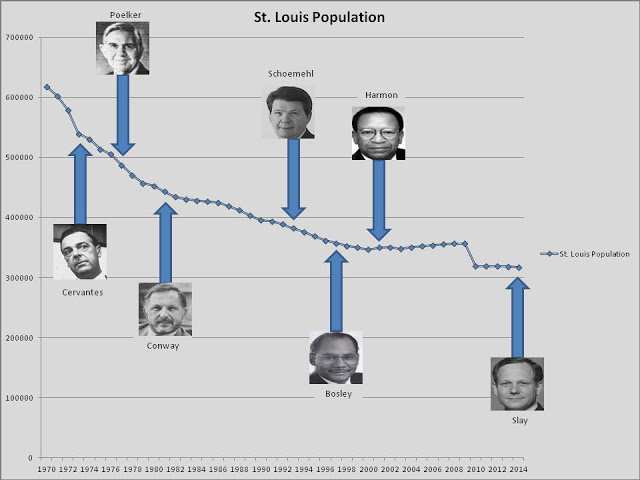
I'm not here to criticize though; I recognize that public service is a tough job. The professional and personal toll of being a politician must be exhausting. I respect Slay for being in office for so long and running successful campaigns for re-election. That is not easy.  But the fact remains that during the Slay years ~33,489 people up and left St. Louis during his tenure as our top leader; this is a staggering figure that should always be considered when opining on his legacy. It just blows my mind that we are losing this many people year after year. If the 33,489 people who left St. Louis made up its own city, it would be the 19th largest city in the state of Missouri.

Yet, it would be shallow to just point out the numbers of people who vacated during a single Mayor's term(s), without taking a look at the other modern-day Mayor's numbers. This is not intended to be a petty political shot, rather a quest to understand the history and trajectory for St. Louis during my lifetime.

So let's take a look at the data.

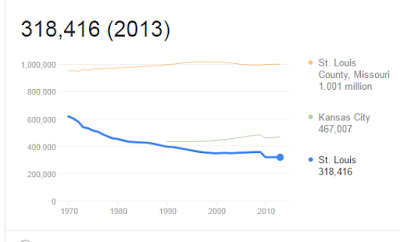
An assumption was made from the graph below; my data source was the United States Census Bureau, plotted out annually by Google. Since this graph only went back to 1970, I used the 1960 data and increased the 1960-1969 data in a linear fashion so I could estimate the population when Mayor Alfonso Cervantes took office in 1965. Meaning, those years will not be accurately represented. But you still get the gist of the population losses.

year by year 1970-2013 data plotted by Google

Here's how the numbers shake out for each Mayor from 1965 to 2014, sorted by the largest declines:

Why the massive drop from 2009 to 2010? Either there is an error in the data, or the rules were changed on how Census counts were estimated. But, you get the point...people are not picking up what these guys have been laying down...and this has been going on for over 60 years.

You know despite these negative numbers, I am still bullish on St. Louis. I've lived here for 22 years and, as a whole, quality of life in the city has gotten better. Sure, there are exceptions, but I still firmly believe there is reason for optimism and hope for the future.

But in order to steer the ship away from this exodus it is going to take leaders who can listen, compromise, think large, act independently and...um...lead. You know, inspire. People with an outsider perspective would be wonderful.

Let's hope someone runs that is interested in the entire city, someone that lives in a neighborhood that is racially and economically inclusive, someone that has lived the challenges of navigating the schools, someone who takes ownership of the harm that petty and violent crime have on our business community and our citizens. Someone that loves it here and cares as much as the devoted on the future of the city. It is now or never, right?

No more silver bullet stadium proposals! We need to focus on neighborhood growth. Jobs within the city's borders that hire new and existing people in the city. Make sure we subsidize and incentivize small and medium sized businesses at the same rates as the larger ones (my neighborhood restaurant has done more to raise my quality of life than the Rams ever did). We need someone who can see the big picture that recognizes our faults and makes every decision to get us one step closer to that goal. If you can articulate a vision and repeat it incessantly until all 315,685 of us know your goals, then we can appreciate the decisions that are made to march toward those goals...even if sometimes it feels like a compromise. We need to feel some wins. I'd prefer 1000 little wins vs. 10 big ones.

Best of luck to the next set of candidates for Mayor. It will be fun to watch the field of candidates unfold. We need as many people paying attention, reading, listening and making educated, careful and critical choices at the ballot box. And remember, if you don't live in St. Louis you can't vote in St. Louis. You are either part of the problem or the solution when it comes to things that matter like hiring leaders. Shooting your mouth off from the suburbs just doesn't cut it when it comes to real change. 

Here's to growth on the horizon and a brighter future that lets all these young people doing great things in our city not think they have to move to the burbs to live out their adult lives.

St. Louis City Talk Update

Holy crap, I'm edging toward one million page loads on this blog...never thought that'd happen. Anyhow, I've been pursuing the personal goals of writing for pleasure and promoting St. Louis as a great city to live/explore since 2008. I started making lists of public places and photographing, researching and writing about them one by one.

Neighborhoods, parks, libraries, fire houses, you name it, I like making lists and setting goals and sharing my findings with other like-minded people. The experience has been positive overall and I plan on continuing to write on this blog into the near future. It keeps me learning about my city and I never want to be stagnant when it comes to my opinions on St. Louis stuff.

So with that in mind, it feels like the right time to start updating some of the older blogs starting with the neighborhood posts. For instance, I looked back at my Gate District post from 2010 and think I could've done better. This is a part of the city that confused me when I lived farther away; I've since moved to a neighborhood just south of here about five years ago and have spent a lot more time in these parts. We routinely visit a couple friends who live here, my wife now works here, my kids use the St. Louis University track complex here, I've come to love shopping at Walter Knoll for all my landscaping needs and I didn't know Maya Angelou was born here back then. I guess what I'm trying to say is, my perspective has changed. I know more now and maybe I didn't give the Gate District a fair shake back in 2010. I at least have a more personal perspective.

One of the most fun things about a city is that it is constantly evolving, changing and reinventing itself in many ways. This keeps me curious and excited about a place I feel like I know pretty well, but constantly surprises me.

So while I'll be updating some content, I won't delete photos, because I like capturing the city in a particular time. But, I will update content including revised census data, updated park and library links and content related to new development/major demolitions.

And then I'll work on updating the blog to a proper website. I had scheduled a class at the community college in the suburbs to transfer the Blogger site to a website to give it a more modern feel; but life stuff got in the way and I had to cancel. So at this point, I will be seeking out a website design firm to make this thing look better, and if you have any advice on good web designers (in the city of course) I'd gladly accept them.

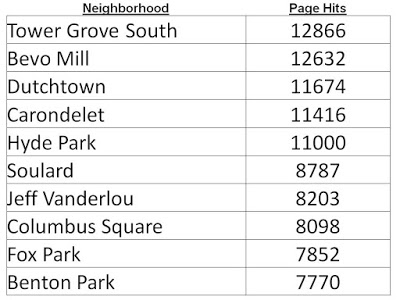
Anyhow, as far as updated blogs, I started with the Gate District for reasons previously stated; but, going forward I'll update the neighborhood posts in the order of most read, starting with the top ten:

I'll then follow up with some the neighborhoods that have changed the most (by my estimation) in the past five or ten years.  So thank you all for reading and following along the way. I am so grateful to have a hobby that keeps me intellectually stimulated and has brought new acquaintances and/or friendships into my life.

All the best,

Mark

Union Station 10 Cine' (1988-2003)

When we lose places, be they businesses, homes, or just a building we lose memories, historical touch points to revisit, and worst of all, our identity as a place, as a city.

I gave the many theaters we've lost over the years in St. Louis some consideration here and here. And as of publishing, we have four great movie theaters existing in the city.

Yet, when I moved to St. Louis in the 1990's, there were only two first-run movie theaters in town: the Hi-Pointe and the 10-screen Union Station Cine'. The Avalon at Kingshighway just south of Chippewa (now gone the way of the wrecking ball) was still showing films; but I regret never making it. My wife went there once to see a sing along version of the Wizard of Oz, you know where the little ball jumps around the words on the bottom of the screen. She may have been one of only a handful of women in the seats :)

I did go to the Union Station 10 Cine many times though, so I feel obliged to share my experiences and thoughts on the place since it is the only theater I attended that is now shuttered. It is really hard to find info on the other lost theaters of St. Louis, so I'm compelled to contribute a personal story to the only lost theater I was in.  Sometimes we don't think as kindly of the 1980's as we should, and it might be easy to write these places off. 

The website Cinema Treasures includes many anecdotes from people who attended these lost buildings and I really appreciate their stories and perspectives. So I'll share a couple memories of mine.

I guess even the most mundane spaces have history and stories tied to the past and Union Station 10 Cine was no exception. It felt like this place needed a proper tribute.

First a little on the building itself.

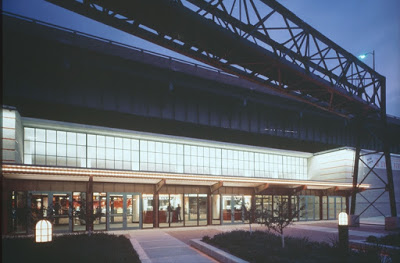
This theater was just south of the massive Union Station train shed/parking lot near the "Power House". It lasted for only sixteen years, with screenings from 1988 to 2003.  Per "Cinema Treasures":

The theatre opened with a 70mm screen and two auditoriums with THX sound. The theatre itself was a 42,000 square foot free standing building.

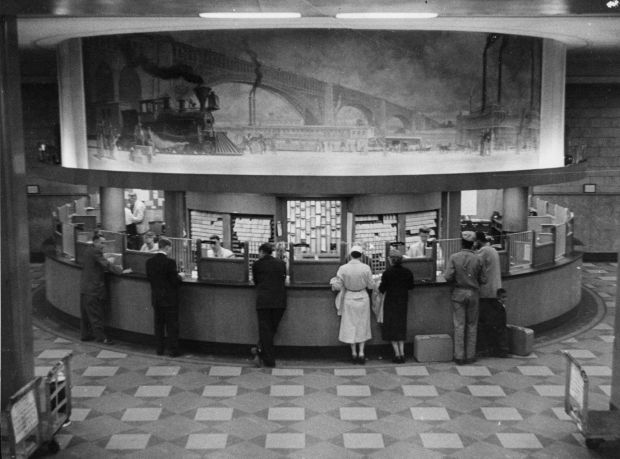
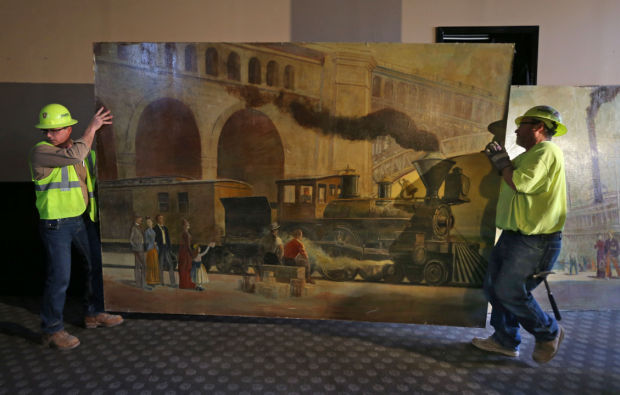
The lobby area featured an old fashioned ice cream parlor and a deli so that patrons could either eat before or after the show. There was a mural that was removed from above the old ticket counter in Union Station where passengers would buy their train tickets. The mural depicted line men working on the rails and different types of trains. The mural was restored and put on the wall above the concession stand in the new theatre.

The Union Station Cine' was successful as far as patronage was concerned but the high priced lease hindered the profit. When Wehrenberg went into bankruptcy they tried unsuccessfully to renegotiate the lease but to now avail. They closed the theatre and a short time later Wallace Theatres picked up the lease and operated the theatre until late in 2003. It has been closed ever since. (source)

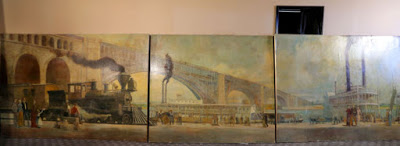
The mural described above was an important work by artist Louis Grell called "Commerce on the Landing".

Luckily, the history of the mural is well documented by the Louis Grell Foundation:

Grell was commissioned to paint a unique seven foot tall by twenty-eight foot long mural to be mounted above the curved “new ticket counter” as part of the World War II renovation at Union Station in St. Louis in 1942. More than 100,000 passengers used the terminal daily during the height of the war. The St. Louis Union Station terminal was the “busiest passenger rail terminal in the world.” This historic mural titled Commerce on the Landing, depicts the Eades Bridge, Mississippi River front, 2 mighty Steam Boats and an old fashioned steam engine train on the riverfront during the 1880′s. The mural was officially unveiled in June 1942.

The mural was in place until c 1985, when, during an extensive renovation it was moved to the UNION STATION Cine 10 theatre for a short period until the theatre closed and the mural was lost.

This mural was rediscovered in March 2014 by employees during a $66 million renovation of the hotel and terminal. Please see color pictures of the newly rediscovered mural above. Notice the Impressionist style used by Grell for this particular commission. Versatility by Grell was common. Many news agencies covered the discovery from St. Louis to Indiana, Illinois, many across Missouri, the Washington Times, the New York Post and the San Francisco Gate all ran extensive stories and links to the video covering the great find during a time when great art discoveries are being well represented in Hollywood films such as the “Monuments Men.”

The mural underwent extensive conservation in St. Louis by artist and conservator Irek Szelag, in preparations to be rehung in the Union Station Grand Hall in mid 2015. St. Louis’s Kodner Gallery owner Jonothan Koder conservatively valued the artwork at $150,000 due to its beauty and relevant historical stature. Union Station owners believe Commerce on the Landing ”is considered one of the most important public artworks ever created for St. Louis.”

Furthermore, local reporter/producer Ruth Ezell did a wonderful story on the mural and Louis Grell on her "Living St. Louis" segment for local PBS station "Nine Network". Watch the ~11 minute segment below, which aired on Channel 9 in 2015.

So the entry on the mural from Cinema Treasure checks out. Another anecdote on the Cine was from commenter "mmiller" who shared an interesting observation about the building's unique location under the elevated lanes of I-64:

One interesting thing about this theatre was that it was built under a major highway and that the support pillars for the highway were actually in the building without actually touching the building (this was a requirement of the highway department). At one time it was the only building in the US with this bizarre use of space. The construction price of this theatre was very high because of all the extras which also included a full service bar and high end sound systems. The lobby was expansive and very interesting to see. (source)

You can see what the commenter was talking about as the theater is truly tucked under the elevated lanes of the Interstate:

The exterior's coolest feature was the incorporation of the overhang waiting areas for train loading.

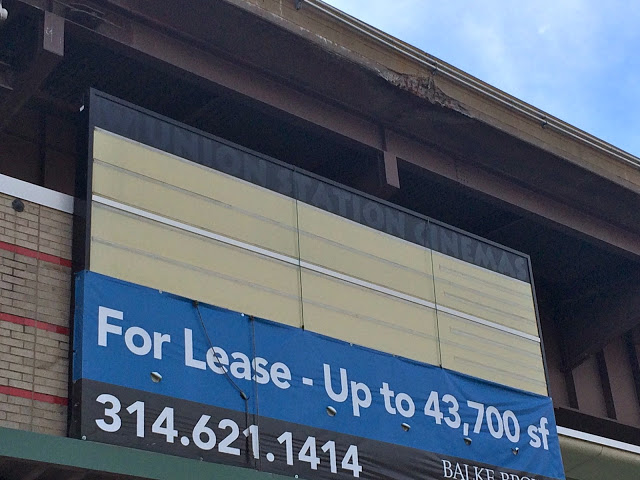
The marquee and ticket booth were nothing special compared to the older theaters, but oh how 80's:

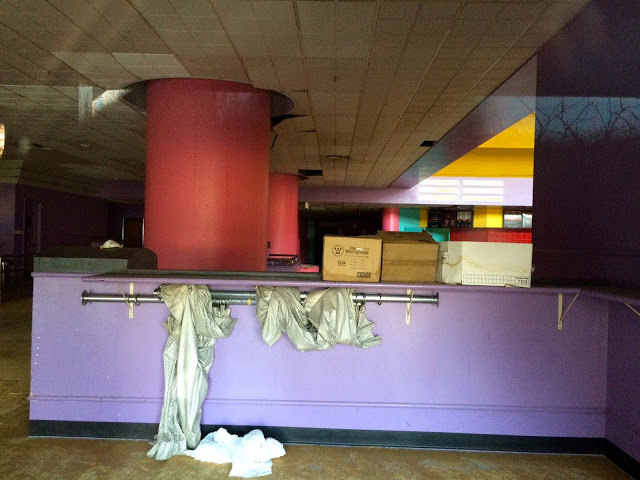
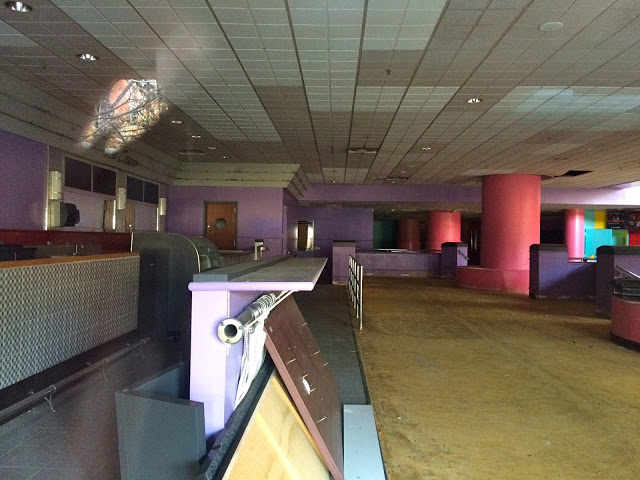
The 1980's color schemes were in full force, looking like the early Arizona Diamondbacks uniforms...

 former displays for movie posters

Here you can see the deli and ice cream parlor.

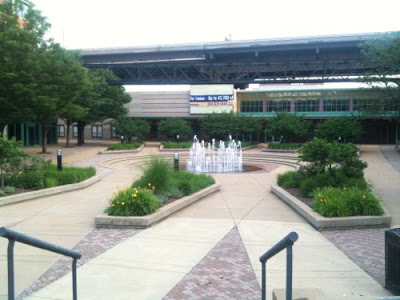
Photos of the Union Station 10 Cine' are hard to find on the web; but, thanks to some of the usual STL bloggers, there is some content available. The following photo is from Steve Patterson, posted on UrbanReviewSTL and shows the atrium in front of the theater building...again, very 1980's...but still in great shape (and in the shadow of the K-SHE 95 studios). I don't know if it was intentional or just my imagination, but it looks like a train from afar:

Photo credit:   UrbanReviewSTL

Union Station 10 Cine' closed in 2003 but not before my wife and I took in the amazing martial arts film "Crouching Tiger Hidden Dragon" in or about 2001. By that time the movie theater was becoming run down, poorly staffed/managed and pretty sketchy...it felt like it was on it's last leg. 

Two memories stood out. 

First, by that time the patrons at the theater were nearly all black. And of course, anyone who knows anything, can tell you that seeing a martial arts movie with a nearly all-black audience is a true American experience...not unlike the difference in attending a buttoned-up, priest-led Catholic mass vs. a more outwardly spiritual Baptist choir/band-led service...both good, but drastically different. The stereotypes are well known and documented, this is not news. And the Union Station 10 Cine did not disappoint on this particular evening.

This showing of Crouching Tiger Hidden Dragon was a full-on, max-volume crowd participation night and we were likely the only white people in the theater and it burned a memory into both of our brains. 

Sometimes the outbursts and constant talking is annoying, sometimes it is transcendent...depends on the internalized elixir, mood and/or vibe of the night. You just can't make this stuff up. Crouching Tiger was rife with beautiful special effects of flying Qing dynasty warriors and plenty of sword play and sparring. 

The crowd would erupt in hilarious outbursts of commentary related to the bad-ass fight scenes. The in-theater commentary was like standup comedy and this particular night we were into the distraction, embraced it and had fun with it. My wife and I still utter little asides that we heard from the crowd during that movie nearly 14 years later.

It was a great night and a great memory.

Another benign yet not as pleasant memory came on a different night when I went to use the restroom during a show. The lobby and concession area was dark and sparsely staffed and some dude slowly followed me into the restroom. Now I'm not an idiot and I know how to minimize potentially troublesome situations. I thought he wanted to sell me some weed, so I made continuous eye contact and kept conversation going as I stood at the urinal. Turns out his business model was more of a tryst-based one and I was just goobed out. You didn't get this kind of thing in Belleville, Fairview Heights or South County where we grew up watching movies, so I chalked it up to city living and making me stronger and better and wiser to the different things going on in our great society.

So these memories are nothing too special, but my two cents and the stories I can remember from this theater. I'm sure there are better stories and photos out there, so please feel free to share them here in the comments section.

Anyhow, these two stories probably don't make up the typical American movie going experience. They are outliers in the huge sample size of millions of people going to the theaters year after year.  But these experiences described above most likely led to why many quit going to the Union Station 10 Cine'.  If you're not up to it, the talking and interruptions during a movie can be considered off putting, rude and/or low brow.  I bet most suburbanites and visitors staying at the hotel in Union Station who wandered over for a movie walked away shell shocked. The older I get, the more I understand that need for peace and quiet.

One thing seemed clear, the theater was on its last leg.

The reports of the theater's demise are fairly well documented and a couple journalists shared the racial component of the story that I suspected.

A 1996 St. Louis Post-Dispatch article by Fred Faust available on Questia.com documented the unfolding drama with Wehrenberg and the struggles of drawing suburbanites to St. Louis.

Ronald P. Krueger, president of Wehrenberg Theatres, is threatening to close the Union Station 10 Cine.

In a letter Aug. 2 to the Powerhouse Partnership, landlord for the theater, Krueger says Powerhouse has breached the lease because of "Union Station's stated policy of preventing access to this center by minors and other young adults, unaccompanied by their parents during the evening hours.

"Due to its geographic location, the overwhelming majority of this class of individuals are minorities. The result, then, of this policy is to make unwelcome at the center a significant portion of the market which the theatre targets and a concomitant decline in theatre traffic and revenue.

"Consequently, present as well as future economic viability of the theatre operation has been eliminated."

Krueger also complains in the letter that parking problems have hurt business at Union Station 10 Cine.

Unless the "access policy" is immediately abandoned and parking problems solved, Krueger writes, the letter is notice that his company will vacate the premises, probably in 60 to 90 days.

A week after Krueger's letter, Powerhouse sued Ronnie's Enterprises Inc., the Wehrenberg entity that signed the lease. The suit in St. Louis County Circuit Court seeks an injunction that would force the theater to remain open.

The key partners in Powerhouse are developer Garrett Balke and builder Ralph Korte. In addition to the theater, they developed the office buildings at the southern end of Union Station.

In the suit, Powerhouse says the buildings were financed by Aetna Casualty and Surety Co., to whom the rents are assigned. If Ronnie's stops paying rent, the suit states, Powerhouse "will be unable to make its mortgage payments to Aetna."

The theater and other buildings would risk foreclosure, according to the suit.

The Ronnie's lease runs from Aug. 1, 1988, through July 31, 2008, plus optional renewals. The current rent on the 40,000-square-foot theater is $610,887 a year, or $50,907 a month.

There are also common-area maintenance charges. A percentage rent clause says Ronnie's will pay 7 percent of annual gross receipts in excess of $4.1 million.

Neither Krueger nor Balke could be reached Friday for comment.

When Union Station 10 Cine opened eight years ago, Post-Dispatch critic Joe Pollack hailed it as the first first-run movie house in the city since the Stadium Cinemas closed in 1984.

But, noting that Krueger's company had had problems with the Stadium Cinemas, Pollack wondered if the Union Station theater would succeed in drawing suburbanites back downtown, past more convenient mall locations. (source)

Then, according to a  November, 2000 St. Louis Business Journal report:

The theater was operated by Des Peres, MO-based Wehrenberg Theatres for nine years (1987-1996). Wehrenberg pulled out in 1996 amid some parking disputes and racially charged controversy between Wehrenberg and the theater owner Powerhouse Partnership over parking and Union Station's policy regarding minors at the time. A letter sent to the Powerhouse Partnership shortly before Wehrenberg pulled out contended that the theater's business had been hurt by "Union Station's stated policy of preventing access to this center by minors and other young adults, unaccompanied by their parents during the evening hours." The policy was tantamount to discrimination, according to Wehrenberg, because its primary audience was minority youth.

Rumor has it that the disputes led Wehrenberg to claim they would never operate another theater in St. Louis and evidence suggests that is true as all their current operations are in the suburbs of St. Louis County and other parts of Missouri, Illinois, Iowa and Minnesota.

Too bad, I have good memories of that Wehernberg jingle playing before many a movie in Fairview Heights, Illinois, and it'd be nice to have them back in St. Louis.

The above policy eventually worked itself out and a new investor came. Wallace Theater Corp., a Portland, OR based firm, acquired the theater from Wehrenberg. They spent $1 million on renovations, and reopened the theater in 1998. Just two years after reopening the Union Station 10 cinemas, Wallace entered into talks with Union Station's owner to end the theater chain's 10-year lease as Union Station was courting Aurora Foods who wanted the extra space to expand their corporate operations (source).

The Aurora Foods deal never came to fruition and the theater was kaput.

With the words of Kurt Vonnegut and Nick Lowe dancing through my head:

"So it goes."

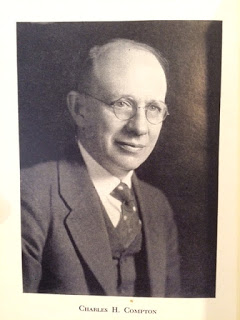
Charles H. Compton

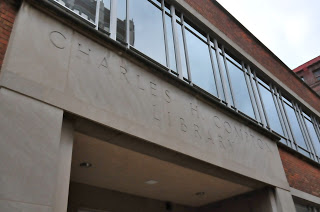
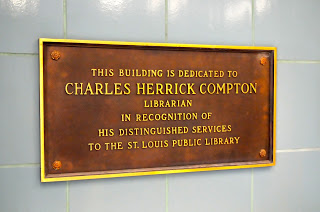
The Compton Library at 1624 Locust Street, accessible by appointment only, was named in honor of Charles Herrick Compton (1880-1966).

A staunch advocate for the library system in St. Louis, and public libraries in general, Compton was employed by the St. Louis Public Library from 1921-1950. He became the Director in 1938 and held that position until 1950 when he retired. The Compton Library was built in 1957.

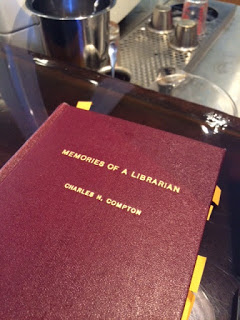
Online information about Compton's life is fairly limited, so it felt like a little old fashioned research seemed appropriate. Luckily, Compton published a detailed record of his early life and professional career called "Memories of a Librarian" which was published in 1954 by the St. Louis Public Library.

A book about a librarian, I know what some might be thinking...quiet work spaces, books, Dewey Decimal Systems, etc...paint drying. Yet, the recount of his career pulled me in from the start. His life and stories paralleled America's best of times and worst of times. His career coincided with America's involvement in World War I, the Roaring 1920's and the Great Depression of the 1930's where in one of his speeches to the American Library Association in Denver in 1935 he said:

"As I look on the past twenty  years of war, boom, depression, they are painful years. As I look on the world today, it is all too much a ruthless and a senseless world. As I look toward the years to come, there is a foreboding, but my faith in democracy is unweakened, my belief in libraries as essential in a democracy is unshaken. Libraries will be a part in making of the new and better world which we all desire."

Compton chased that desire and spirit throughout his career and his attention to detail and writing style lend insight into his quirkiness as a staunch book lover. He once said of his profession:  

"We librarians are a chosen people, a peculiar people in our own eyes and perhaps peculiar in the eyes of others."

Maybe so, but Compton's successes and accomplishments transcended any bookworm idiosyncrasies or self-imposed limitations; this man took public libraries to a new level in America and St. Louis was lucky to have him.

So the purpose of this post is to highlight his time in St. Louis and the suburbs to the west of the city as well as some of his key accomplishments.

But first a little background on his early life and lead up to his move to St. Louis.

Compton was born in 1880 in Palmyra, Nebraska, and later moved to Lincoln, Nebraska where he attended a two year preparatory school run by the University of Nebraska where you could finish your four year high school degree in two years. 

He went on to attend the University of Nebraska, graduating in June, 1901.

After graduating and working a number of jobs that took him from Minneapolis to Billings, Montana and eventually back to Lincoln, he soon decided, somewhat by chance, that he wanted to be a librarian, inspired by his sister, who was an assistant at the University of Nebraska Library.

He followed his heart and in October, 1905 took a train to Albany, New York where he enrolled in the New York State Library School. According to Compton this was "when life began for me." During his schooling, he became the librarian of the Albany Y.M.C.A. in 1906. He graduated with his degree in June, 1908.

A few months later, he landed a job as librarian at the University of North Dakota and moved to Grand Forks, eventually married in 1908 and started a family in 1910 with the birth of his first son. The library was one of the 2,509 Carnegie libraries built between 1883 and 1929 throughout the United States.

After working for the University of North Dakota for a year and a half, he accepted a reference librarian position with the Seattle Public Library. Here he made a name for himself by focusing on fund raising and publicity for the library system in the Emerald City. As a result of his efforts and diligence, patronage rose 150%, the book collection nearly quadrupled and the periodicals doubled. Seattle is where Compton blossomed professionally. He started receiving invitations to more and more library associations and speaking engagements at regional conferences. His second son was born in 1914 and they bought their first house.

In 1918, Compton was given leave from the Seattle Library to lead an effort by the Library War Service in Washington D.C., who had requested the American Library Association set up a program to provide reading materials to servicemen both domestic and abroad during and immediately following WWI.

Compton met many influential and talented people in his field during his tenure in the Libary War Service in D.C. He managed a budget of $70,000 per month and was buying an average of 2,500 books per day to establish the library for servicemen. He worked hard, seven days a week and his mission was an overwhelming success. Nearly 3.4M books were shipped to outpost camps, hospitals and bases throughout Europe and the United States. His service and the war came to a close and he returned to Seattle in 1918. In six months he assumed the head librarian position at the Seattle Library.

This service during WWI inspired Compton to take what he had learned and apply it to the homeland as well...for the good of the public. He became part of the "Books for Everyone Campaign" and moved to New York City traveling to and from NYC and Chicago to help lead this effort which espoused the tenet that "good books made good citizens". He amassed a staff of up to 30 employees who were "banging away at the campaign with might and main." The group set out to raise $2M to fund the campaign to distribute books to the public libaries across the country, but the efforts failed to raise their target and the group eventually disbanded. Compton and his family did not like NYC or Chicago life and were happy to return to Seattle in 1920.

In the Spring of 1921, Charles H. Compton was offered the position of assistant librarian of the St. Louis Public Library and by June he was working in St. Louis. He was connected with the head librarian at Washington University who took him under his wing and put him up in a room in his home on Cates Avenue in what is now called the city's West End Neighborhood. When he moved his family to the area, they rented a house in the small town of Kirkwood, MO (pop. 4,500) ~ten miles from St. Louis. When settled they looked for their first house, and chose another small town ~eight miles from St. Louis called Webster Groves, MO (pop. 9,500) in 1922. The home is no longer standing as it was demolished for Interstate 44 construction just south of Webster University's main campus.

The family adapted to life in the suburbs of St. Louis quite well. Like most, they became infatuated with baseball and attended many games at Sportsman's Park watching Babe Ruth play against the Browns, but the Cardinals were their favorite team. The Compton's were accepted into St. Louis Society with open arms led by Charles current love for Mark Twain and Carl Sandburg which carried over well with the men's clubs he was part of that included the Dean of Washington University and former St. Louis Browns and Cardinals great Branch Rickey who eventually went on to sign Jackie Robinson to the Brooklyn Dodgers thus breaking the color barrier in the Major Leagues.

He had a hand in establishing the Webster Grove Public Library on a tax supported basis in 1927 when he served on that library's board until 1931 when he resigned to move to St. Louis after his kids graduated high school in Webster Groves and went to Washington University. They moved to an apartment at 5888 Cabanne Avenue in the West End Neighborhood.

His respect in the National library community was growing and he became President of the American Library Association in 1934 amid the Great Depression where he was tasked with resetting the charter for the Association during the "perilous and trying times" where he rallied librarians to emerge from the "cheerless years" and lead libraries to a brighter day ahead.

Compton's work and inspiration seemed to draw from his American experience of the Great War and the Roaring 20s and the Great Depression. His no-quit spirit during the Depression led him back to Washington D.C. where he led ALA discussions with the Agricultural Deptartment to collaborate on gaining access to public libraries in America's most rural parts. This was a most noble cause, but an increasingly uphill battle when the Treasury was shrinking. This never came to be, but he continued his pursuits and represented St. Louis well. 

Once again faced with the precipice of the changing times, Compton was assigned as a delegate to the International Library of Congress which took him to a conference in Europe where he was hosted by a fellow librarian of German descent. They spoke of Adolf Hitler's rise to power in Germany acknowledging Hitler's successful management of banking, currency and general economic conditions while lamenting his hatred for Hitler's views toward Jews.

Throughout his expanding endeavors, he was successful in raising funds and expanding the library system in St. Louis. He was a wonderful advocate and diplomat for free public libraries and books in general.

In 1938, Compton was assigned head librarian of the St. Louis Public Library. And, in 1950 at the age of 70, he chose to retire.  Reflecting on that time in his life he said: "I dislike the word gerontology. The very sound of the word is disagreeable. How to grow old gracefully certainly deserves a more pleasing designation."

Beloved by his peers and associates, a huge party was thrown for him in 1950 where hundreds turned out ranging from library staff to media members to national and international friends and colleagues attended.  At this celebration he stated:  "I feel that we all should be tremendously proud of our profession. Many of us became librarians by what seemed mere chance. Certainly that was true in my own case. Librarians almost universally are happy in their work and would not change to other professions. Librarians have enthusiasm for the work they are doing. Life without enthusiasm is not worth living."

His praises were sung by dignitaries ranging from St. Louis Mayor Joseph M. Darst to First Lady Eleanor Roosevelt. He was lauded for bringing the St. Louis Public Schools and the Public Libraries together through collaborations. 

Today, where all printed materials are being scanned, digitized and uploaded for full global access via the web/cloud, it is uncertain as to what the future holds for books and libraries in general. One thing for certain is that in Charles Compton's 29 years with the St. Louis Public Library, he was able to take public libraries to a new level in our fair city.

Charles H. Compton lived to the age of 85. He died on March 17, 1966.

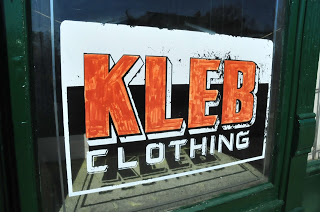
Kleb Clothing and Shoe Company

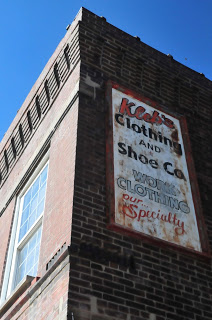
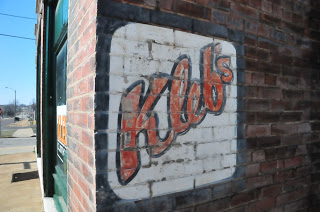
Kleb Clothing and Shoe Company was one of my favorite places in the city's  Patch Neighborhood. For those of us who knew it (probably all men), this was a place to purchase high quality, mostly American-made work-wear, no frills.

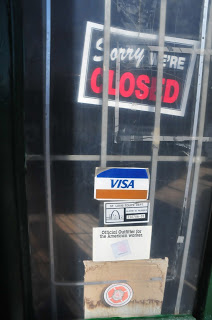
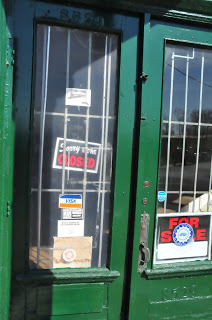
So why all the past-tense? Well, I just recently learned the hard way that Kleb's has closed. I needed waffle-patterned thermal underwear and I went to where I knew I had to go to avoid the suburban retail headaches and it hit me...Kleb's was closed, cleaned out and shuttered for good.

Man, I never got to say goodbye.

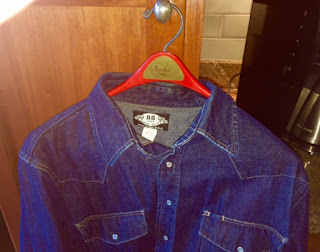
Nobody told me Kleb's was coming to an end. Maybe no one knew, maybe there was a going away party. I don't know - I just shopped there. If I'd have known, I would have gone in one last time, bought out my favorite Made In U.S.A. denim shirts and shook hands and paid my thanks and respects.

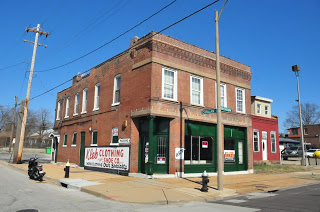
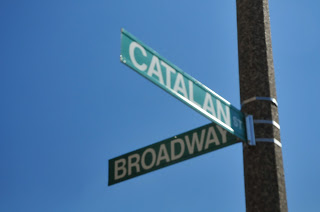
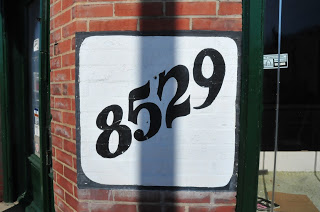
Kleb Clothing and Shoe Company, occupied a storefront at 8529 South Broadway at Catalan Street since  1948 right across the street from the St. Louis Skatium near the city's southernmost tip.

So I thought I'd better share some photos and memories to eulogize one of the last men's clothing stores that hearkened back to the days of American made textiles and work clothes in a retail setting that offered soul over convenience.

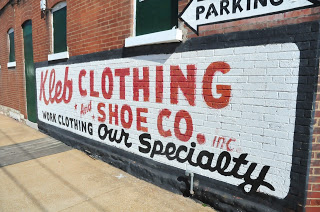
Work Clothing our...Specialty (effective use of ellipses)

Kleb's had that heavy door with the finger depressor that didn't really work so you just nudged it open with your shoulder. The first step onto the dusty and worn wood plank floor had been made by many a working man over the years; there was a give of what felt like an inch upon that first step.

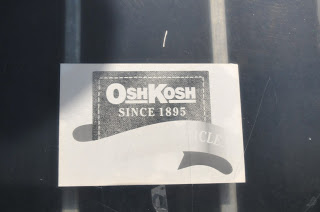
Wood racks were stocked with work shirts of flannel, denim, wool and cotton. There were Dickies jumpsuits and Osh Kosh overalls - all non-ironic: function over form, substance over style. No frills shirts that last long with no preference for fads  (Y Chromosome essentials).

You'd usually see a guy sitting in a chair against the back wall, plastic cup filled with (?) who might or might not work there. He keeps the conversation going with the other guys in the store.

When you enter, the guy behind the counter offered a jovial "hello" and/or "welcome" to let you know that "we don't have to talk" or "hey, glad to see a customer, let's talk". Whatever you prefer.

I'm an admirer of pre-NAFTA economies and locally made clothes and goods...that regional spin on culture. St. Louis made a lot of said stuff and I miss it, consumer and otherwise. I fantasize about the old localized supply chain where a farmer harvests cotton in Arkansas or the boot-heel of Missouri, trucks it a couple miles up the road to the gin and bales of cotton lint are sent to a factory in a city. Shirts get made, packaged and distributed to independently owned family storefronts.

Enough with the Gen-X curmudeonry, back to Kleb's.

My memory is a little foggy, but I'm pretty sure the bearded guy behind the counter was a former pro-wrestler. He looked the part and the faded, yellowish newspaper clippings under the sheet of plexiglass that sat on the cash register counter indicated as much.

This was Klebs, a storefront in one of the most working class parts of the city, selling clothes made by working class Americans....all brought to you by a former pro-wrestler.

This is South City at its best.

Places like this made a mark on this St. Louis transplant and made city living fun and urged me to explore other storefront businesses all over the city.

As my last U.S.-made denim shirt from Kleb's fades and frays so will my memories of this great South City place. Kleb Clothing, I'll miss you. But, more than anything, thank you for the memories. I don't take them for granted. 

Compton Branch of the St. Louis Public Library

Compton Branch of the St. Louis Public Library

Compton Film Library was erected in 1957 and opened at 1624 Locust Street in 1958. 

Besides serving as the location for SLPL’s film collection, space in the building was devoted to other collections and behind the scenes work such as a bindery, book repairs, and bookmobile services.

As it stands today. Compton Branch is more of a storage, internal working branch and research facility that houses SLPL’s extensive historical periodicals, journal collections, newspapers, folios, patents, trademarks, and local & federal government information. Materials stored at Compton are retrieved and brought to Central Library for patrons use upon request.

Central Express Branch of the St. Louis Public Library

Central Express Branch of the St. Louis Public Library

Central Express, as the name implies, is one of three mini-branches of the system, along with Charing Cross and Marketplace.

First of all, if this isn't the most beautiful section of downtown, it's at least in the top five. The Chemical building, the recently renovated Arcade, the modern, sleek beauty at Locust and 8th Street and of course the Old Post Office building itself.

Carpenter Branch of the St. Louis Public Library

Carpenter Branch of the St. Louis Public Library

The library was named for George Oliver Carpenter, a successful president of a lead and oil company during St. Louis' age of industry. In 1925, while president of the St. Louis Public Library Board, Carpenter announced his plans to donate land for the branch. The Board unanimously resolved to name it in his honor. Carpenter lived in an Italianate-Mediterranean style mansion at 12 Portland Place.

Major League Soccer Expansion in St. Louis - 2016 St. Louis City Talk Favorite

This is the second of two sports related favorites from 2016. The first was the Cardinal/Cordish proposal for a mixed-use development at Ballpark Village.

The next is the potential for MLS soccer in our fair city. The league is expanding and they indicated that St. Louis is one of the top cities under consideration for a team.

Per MLS' official website:

MLS Commissioner Don Garber announced Thursday that Teams 25 and 26 will be announced during the second or third quarter of 2017, at an expansion fee of $150 million each, and begin MLS play by 2020. Teams 27 and 28 will be announced at a later date, at a price delivered in conjunction with the timeline.

The league acknowledged ownership groups from 10 markets have publicly expressed interest in securing an MLS expansion team: Charlotte, Cincinnati, Detroit, Nashville, Raleigh/Durham, Sacramento, St. Louis, San Antonio, San Diego and Tampa/St. Petersburg.

Interested expansion owners must submit applications by Jan. 31, 2017. After review, a series of in-person meetings will take place during the first and second quarters of 2017.

2017 is going to be a critical year for St. Louis when it comes to this burgeoning sport. 

Let me first say, I love sports. Really all sports, but I'm not an MLS soccer fan to date. That would change if we got a team. My kids love soccer. They are into it, they understand it, they play it in the CYC and SLPS. They would beg to go to games just as they do to Blues games.

Secondly, I have had the pleasure of working with people from all around the world. Argentinians, Colombians, Mexicans, Chileans, Belgians, Spaniards and Brazilians, they all have hard core fans. I've never seen such devotion to a team or a sport. It is infectious to be around. It is exhilarating just to be around them and hear them talk about their teams. The chanting, the songs, the colors, the pride...it is like nothing we have here...maybe college football, but Illinois and Missouri aren't those kind of teams.

I think soccer is one of the growth sports for the next century in the U.S. MLS in the most international sport and could help retain and grow our Latino, African and Eastern European populations. I think it could help to attract and retain the next generation of people who will consider living and working in St. Louis.

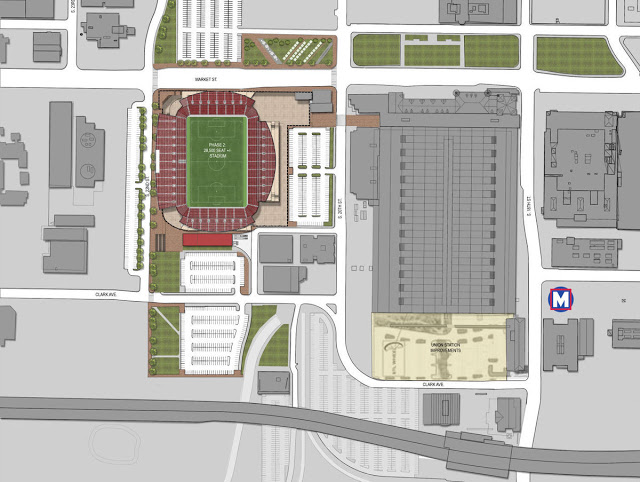
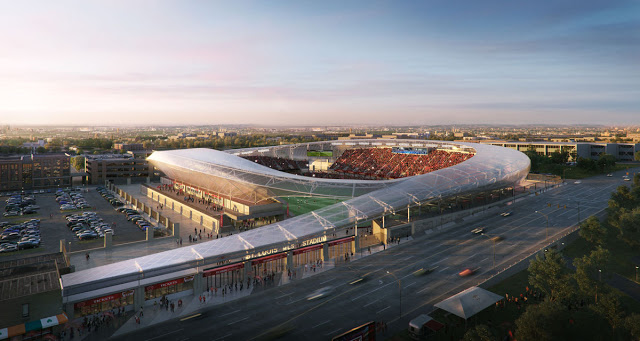
So when an ownership group of wealthy suburban businessmen floated a stadium proposal just west of Union Station in the Downtown West Neighborhood, I was excited.

If any of these owners actually live in St. Louis, I apologize, but my guess is they are County residents who are not being asked for public $ at the city/county level and not expected to own the stadium if the team decides to pull a Arizona Cardinals/Los Angeles Rams move.

Now remember, some of these same well-meaning folks were behind building a second NFL stadium for the Rams. No offense, but they don't understand what people who live in St. Louis need. It is not stadiums, it is $ for schools, neighborhood stabilization, potholes, and cameras, cops, investigators and prosecutors to combat the out of control crime we have to deal with. It's always easier to spend someone else's money.

The group includes St. Louis Cardinals President Bill DeWitt III, World Wide Technology CEO Jim Kavanaugh, prominent hotelier Bob O’Loughlin, UniGroup President Jim Powers, St. Louis Blues CEO Chris Zimmerman and former NFL task force co-chairman Dave Peacock.

Jim Woodcock, global sports co-lead and senior vice president at FleishmanHillard, said the group — which is dubbing itself MLS2STL — came together naturally as several of its members, including Woodcock, began asking about MLS ownership following the departure of the St. Louis Rams. (source)

But the pretty pictures and potential for the city were a bit tarnished by the need for massive adjacent and on-site surface parking lots that are not needed 348 days out of the year, and financial support of public tax money from St. Louis only. No St. Charles, St. Clair, Madison, Jefferson or St. Louis County support has been asked for to date, just good old money bags St. Louis. Yeah right. We are broke and need the money more than any city in the region. But we're supposed to bankroll this thing for 17 professional sports games a year (more if you make the playoffs). The Blues bring 41 games and the Cards bring 81.

Oh, and they want the city to own the stadium. Remember how this works Rams fans? It is not smart investment. 

I want MLS soccer here, but we should not be the only city paying for it.

However, I expect in any negotiation the first offer is the one that most benefits the party making the offer. This is how most negotiations work. It is now up to the leaders in the city to pass the napkin back across the table with a better offer.
And hopefully the voters can decide if the public money from St. Louis should go to another sports stadium that we own.

Remember how this played out with the Rams? It is happening again. 

As a citizen and voter in St. Louis, I am willing to pitch in some for this team. The terms have to be reasonable and the ratio of public funds should match the wealth of the region. If it does, this could be a great regional effort to bring a popular and growing sport to St. Louis.

The region can play together nicely and bring a team here. St. Louis would be a great location, we just need to not get completely screwed over financially.

It can work, but will it? Look no further than Great Rivers Greenway or the Zoo Museum District to see the amazing things we can do when we pool our resources.

It will be fun to watch it all play out in 2017.

Viva St. Louis. 

Julia Davis Branch of the St. Louis Public Library

Julia Davis Branch of the St. Louis Public Library

The branch is unique in that it was the first library to be named in honor of a living person. Julia Davis was an educator and researcher of African-American history. Davis lived to 102 and dedicated her life to teaching and awareness of African-American cultural contributions. She taught for 48 years in the St. Louis Public Schools, 35 of those years at Simmons Elementary in the Ville Neighborhood...one of her students was Chuck Berry.  Then, on the day she retired in 1961 she established the Julia Davis Fund at the St Louis Public Library, designed for the purchase of books, manuscripts, etc. related to the African-American contribution to world culture.

Kingshighway Branch of the St. Louis Public Library

Kingshighway Branch of the St. Louis Public Library

The branch closed and underwent a full renovation in early 2000 and reopened on May 5, 2001. The most unique characteristic of this branch is likely its distinctive round structure complimented by the large picture windows facing Kingshighway and Southwest Avenue that allow for an abundance of natural light. It is a nice design that utilizes the atypical property lines to it's advantage.

Copyright St. Louis City Talk